On a Slope, the Bottom of the Downspout Matters Most
Gutter cleaning in Anderson Township should not stop at the roof edge. A clear channel can send water quickly through the downspout and still leave it in the wrong place. On a hillside lot, discharge beside the foundation or uphill of a retaining wall concentrates roof water where the grade may already be working against the house.
Cincinnati-area clay soil drains slowly. Gutter work does not replace foundation or site-drainage evaluation, but it should preserve a connected path and call attention to an exit that plainly sends water back toward the structure.
Start at the Spill and Work Down
Overflow at one point
One spill often indicates a local debris pile, a plugged outlet, or a low section. Watch whether the downspout below is moving water. Clearing the channel and top opening is the first test.
Water from a seam
A joint may drip even with an open gutter. After debris is removed and the area dries, inspect the surrounding metal and alignment. A focused gutter repair may solve an isolated fault. Repeated failures along a deteriorated run may call for replacement instead.
Fast flow at a bad exit
If the downspout runs well but empties beside the wall, the clog is not the current problem. Look at extensions, connection direction, and the surrounding slope. Do not redirect water across a walkway or toward a neighboring structure simply to move it away from one spot.
Debris Compacts Faster in Shade
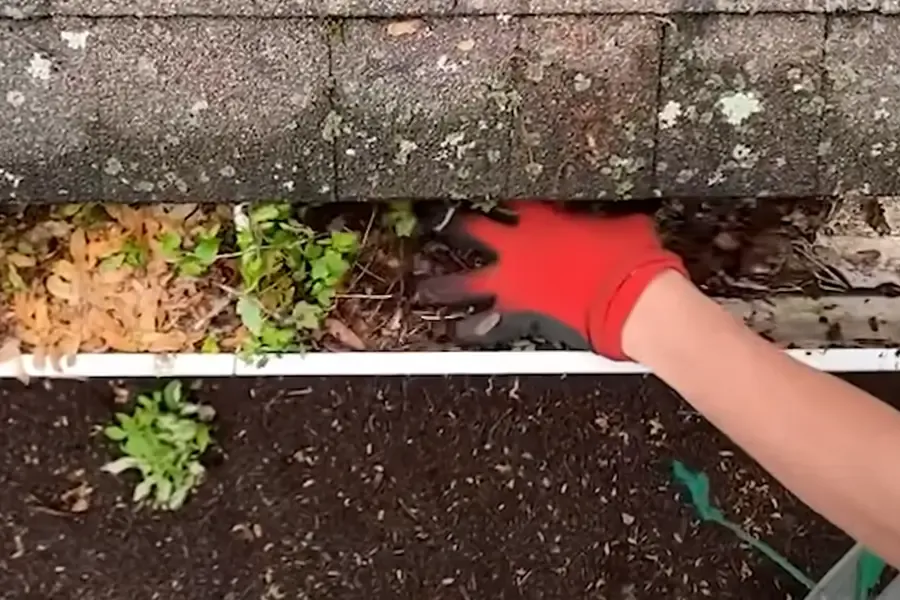
Oaks, maples, and sycamores create a fall leaf round and a spring round of seeds, pods, catkins, and helicopters. The fine material catches roof grit and gathers directly over outlets. Ohio Valley humidity keeps shaded piles wet, allowing them to break down into sludge.
A screen can stop broad leaves but still admit the smaller pieces. Fine mesh can hold a wet blanket on top. Guarded gutters therefore need inspection, particularly at valleys and outlet areas where water and debris converge.
Height Changes Across the Same House
The uphill edge of a home may look easy to reach while the downhill side is effectively another story higher. This is where DIY plans go wrong. Do not compensate with blocks under ladder feet, a long sideways lean, or roof walking.
A low section over firm, level soil can be reasonable DIY work with a stable ladder, gloves, eye protection, and a helper. Soft clay, a side slope, wet rungs, tall reaches, or overhead lines are clear stop signs. Read the DIY gutter cleaning guide before setting up.
Check After the Two Main Debris Rounds
Inspect after spring seeds have finished falling and after most autumn leaves are down. These checkpoints are not promises that every gutter needs service. If the channel is open, the downspout moves water, and the exit is sensible, wait and inspect later.
Before freeze–thaw weather, clearing a known blockage removes standing water and organic weight. It cannot solve every ice-dam cause, but it prevents the gutter itself from holding avoidable meltwater.
For a free Anderson Township quote, call (513) 982-5740. Describe the story count on each side, ground slope, retaining walls, guard type, and where the downspouts release. That full-site description matters here.
Take photos only from safe ground. A wide view of the slope and roof edge is more useful than a risky close-up.