Hyde Park Rooflines Need a Full-Site Look
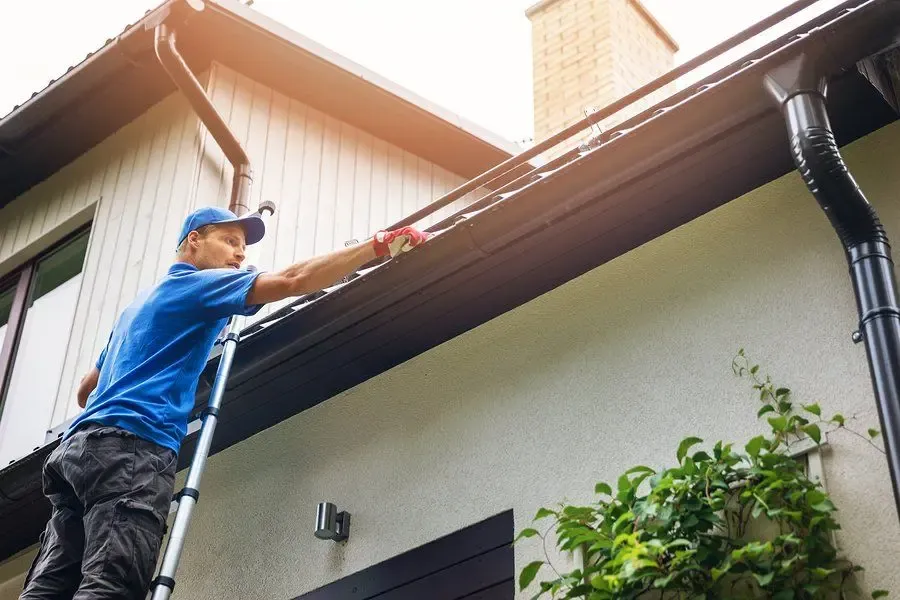
Gutter cleaning in Hyde Park often begins with access. Older two- and three-story homes can place the roof edge well beyond an ordinary ladder setup. A hillside lot makes the downhill elevation taller and leaves fewer level places for ladder feet. Before anyone reaches for the gutter, the ground, roof pitch, overhead space, and working height need a real look.
Some century homes also retain original half-round gutters. Those channels and their brackets deserve care. Wet debris should come out without prying against a distinctive edge or treating old metal like a disposable part. If a joint or bracket moves, the task has crossed from cleaning into a gutter repair question.
The Debris Arrives in More Than One Season
Mature deciduous trees can load a Hyde Park gutter twice. Autumn leaves are obvious. Spring seed pods, maple helicopters, and catkins are smaller but can be just as effective at sealing an outlet. They knot together, catch roof grit, and settle beneath the top layer.
Shade and Ohio Valley humidity keep that material damp. It breaks down into dark sludge that an open screen does not necessarily stop. A gutter can look mostly clear from the sidewalk while the outlet below is capped. During steady rain, watch for one spill point beside a downspout that is not moving water.
Start with the channel
Remove loose and compacted material from the gutter runs. Clear the accessible outlet opening and check whether water can enter the downspout. Debris should be collected and removed, not dropped into planting beds.
Read the old connections
Once weight is gone, inspect seams, brackets, end points, and downspout joints. Cleaning does not seal an open seam. Older half-round parts may call for a focused repair or a careful replacement discussion rather than a generic patch.
Follow the discharge downhill
The downspout exit matters on sloped ground. Water should not simply empty beside the foundation or on the uphill side of a retaining wall. Cincinnati’s clay-heavy soil drains slowly, so concentrating roof water at the wrong point defeats the work done above.
Guards Are a Tradeoff, Not a Default
Gutter guards may reduce broad leaves where cleaning access is difficult. They will not stop every catkin, seed, or piece of grit. Fine mesh can mat over. Surface covers can collect a damp band at the opening. On an older visible roofline, the appearance and future service access also deserve consideration.
If a low section is easy to inspect and clean, guards may not earn their cost or maintenance. If a high section repeatedly receives large leaves, a cover may improve the tradeoff. The answer should come from the debris and roof shape, not a universal product claim.
When to Check a Hyde Park Gutter
Look after spring seed debris has finished dropping and again after most fall leaves are down. Those are inspection points. If a safely reachable gutter is clear and rain is moving through the outlet, it may not need service yet. Check again after the next major debris round.
Before freezing weather, an open path gives meltwater a chance to leave. That does not prevent every roof-edge ice problem, but it removes trapped organic material and standing water from the gutter itself.
For a free quote, describe the story count, slope, gutter shape, visible guards, and the exact place where water appears. Call (513) 982-5740. Do not climb for a close-up; ground-level photos are enough to begin.