Inspect Without Climbing First
Watch the gutter during steady rain. Note where overflow begins and whether the downspout below it is moving water. Look for visible plants, a dark debris line, wet fascia, a disconnected lower elbow, or water discharging beside the foundation.
Use ground-level photographs or binoculars. Do not climb for a diagnostic picture. The water pattern may show that the problem is a lower downspout connection you can inspect safely—or a seam leak that cleaning alone will not solve.
Evaluate Every Ladder Location
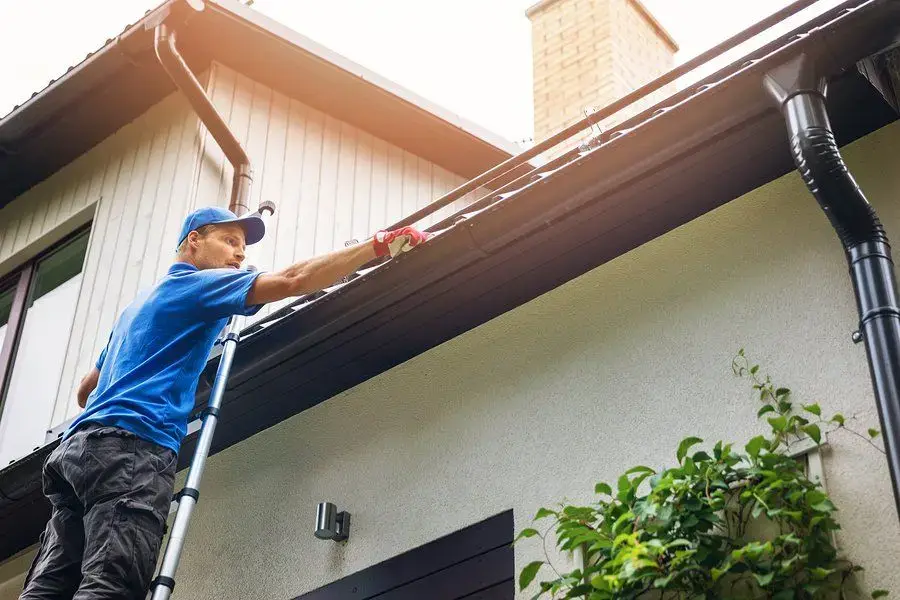
Walk the perimeter and look at the ground, not just the eave. Soft clay soil, a side slope, landscaping, retaining edges, overhead lines, and narrow passages can eliminate safe placement. The back or downhill side may have a very different working height.
Do not level a ladder with loose bricks, scrap boards, or improvised blocks. Do not rest it against a gutter that is loose, bent, or supported by uncertain older brackets. Follow the ladder manufacturer’s instructions and stay within its intended use.
Avoid the Common Shortcuts
Do not lean for one more handful
Keep your body between the rails. Move the ladder even when the next pile appears close. A long reach applies sideways force to the setup and to the gutter edge.
Do not walk the roof to save time
A steep, damp, or debris-covered roof is not an alternate work platform. Ohio Valley humidity can leave shaded areas slick. Frost and thin ice may be hard to see.
Do not work alone
Another adult should be present to observe the setup and call for help if needed. They should not stand beneath falling sludge or tools.
Do not force a downspout plug
Sharp rods can puncture metal or wedge material deeper into an elbow. Clear the top opening first. If the plug cannot be reached through an accessible connection, stop.
If the Setup Is Acceptable
Wear gloves and eye protection. Work in short sections and collect debris in a bucket or controlled container. Wet sludge can stain siding and damage plants when thrown down. Move the ladder often.
After the visible channel is clear, expose the outlet. Use only a modest flow check when you understand where the downspout exits. Confirm that lower connections stay attached and the discharge is not aimed directly at the foundation or uphill of a retaining wall.
Read the full DIY gutter cleaning service guide for the basic sequence. Stop if the gutter moves, a seam opens, or a section remains low after weight is removed. Those signs point toward repair.
Know What Cleaning Will Not Fix
A clean gutter can still have failed fasteners, bent metal, or poor pitch. It can also connect to a buried drain with a separate blockage. Do not keep flushing water into an unknown lower system when it backs up.
Original half-round gutters on older homes require extra care. Their brackets and outlets may not tolerate prying. A distinctive system can turn one damaged part into a difficult matching problem.
The Best DIY Decision May Be No Work
If the channel is already open and rain flows normally, wait. If the only safe access is a tall ladder on a slope, stay down. If guards hide the channel and require disassembly at height, do not experiment from the top rungs.
Call (513) 982-5740 for a free gutter cleaning quote. Describe the house from each side, including story count, ground slope, roof pitch, visible guards, and overflow point. The access details matter more than the size of the debris pile.